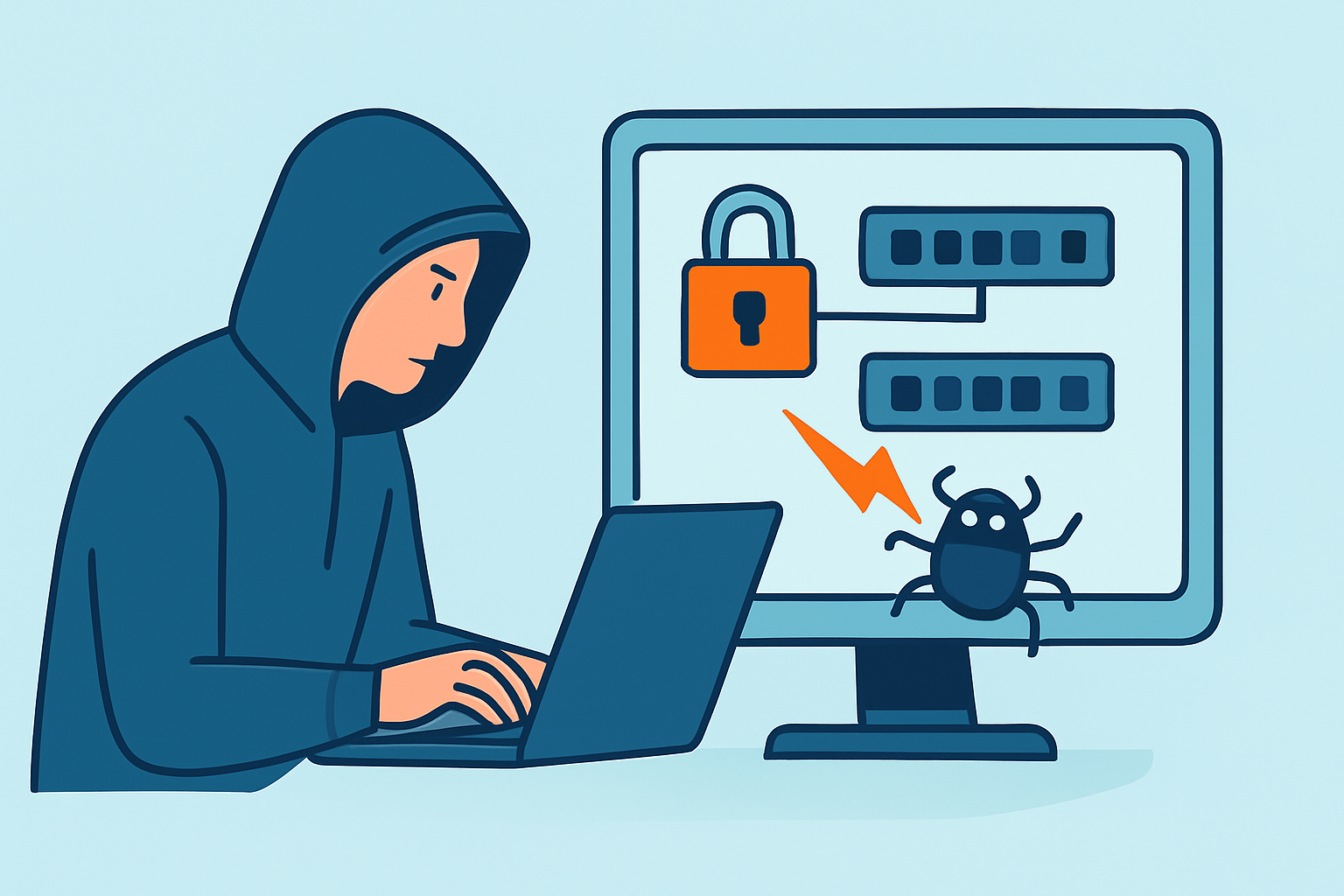
Penetration testers don’t hack the way movies portray it – no dramatic countdown timers, just methodical enumeration of what a server exposes to the internet, and open ports are almost always where that process begins. Understanding how a professional attacker actually uses an open port – not just that it’s “open” – is the difference between a checklist mentality and real network security.
Most sysadmins already know they should close unused ports. Fewer understand what a tester actually does once they find one open, which is why the same misconfigurations keep showing up in engagement reports year after year.
The reconnaissance phase comes before any exploit
Before a pentester touches an exploit, they map the target. That means running a scan against the public IP range, cataloguing every open port, and fingerprinting the service and version behind each one. This is the same reconnaissance approach real attackers use, just with authorization and a report at the end instead of a ransom note. For a deeper look at how this phase works from the attacker’s side, see this breakdown of how attackers use port scanning in reconnaissance.
What surprises a lot of clients during a debrief is how little “hacking” is actually involved in this stage. A tester runs a scan, gets a list of open TCP and UDP ports, and cross-references banner information against known CVEs. If a server is running an outdated OpenSSH build or an unpatched database service, the vulnerability is often already public knowledge – no zero-day required.
Why banner grabbing matters more than the scan itself
An open port by itself tells an attacker almost nothing. What matters is the banner – the string a service returns when you connect to it, often revealing the exact software name and version. A tester connecting to port 21 and seeing “vsftpd 2.3.4” doesn’t need to guess; that version has a well-documented backdoor vulnerability that’s been exploited in the wild for over a decade.
This is where a lot of internal security checks fall short. Teams run a scan, see a port is open, mark it as “known” or “expected,” and move on without checking what’s actually listening. A pentester never skips that step, because outdated service versions are usually the fastest path to initial access.
Which ports get targeted first
Not every open port carries the same weight. Testers prioritize based on what’s historically exploitable and what tends to expose the most – remote management interfaces, database ports left reachable from the internet, and legacy protocols still running in production. A detailed rundown of which ones show up first in almost every engagement is covered in this guide to the critical ports hackers target first.
A common scenario: a company migrates a database to a cloud instance for a quick test, forgets to restrict the security group, and the database port stays open to 0.0.0.0/0 for months. Nobody notices because the application still works fine internally. A tester – or an actual attacker – finds it in minutes with a basic scan and, if authentication is weak or absent, has read/write access to production data before lunch.
From open port to foothold: the actual exploitation step
Once a tester identifies a vulnerable service, exploitation usually follows a predictable chain:
1. Confirm the exact version and known CVEs tied to it.
2. Check for public exploit code or proof-of-concept scripts.
3. Attempt authentication bypass, default credentials, or the specific vulnerability.
4. If successful, establish a foothold and pivot to see what else is reachable from that point.
That last step is often overlooked by defenders. A single exposed service isn’t just a risk in isolation – it’s frequently the entry point that lets a tester (or attacker) move laterally into systems that were never meant to be internet-facing. Mapping findings against a structured framework helps clarify this escalation path; see this guide on mapping port findings to the MITRE ATT&CK framework for how professionals document that chain.
The myth that a firewall makes port exposure irrelevant
A persistent misconception is that as long as a firewall is configured, open ports don’t matter much. That’s not accurate. Firewall rules drift over time – a temporary rule added for testing gets forgotten, a cloud security group gets misconfigured during a deployment, or a rule intended for one interface accidentally applies to the public one. Penetration testers rely on exactly this kind of drift, because internal assumptions about what’s “closed” frequently don’t match reality on the wire.
The only way to know what’s actually reachable from the internet is to test from the outside, the same way an attacker would, rather than trusting a firewall configuration file that may no longer reflect what’s actually running.
What defenders can learn from the tester’s playbook
Adopting a tester’s mindset doesn’t require an offensive security background. It means treating every open port as a question: what’s listening here, what version is it, and does it need to be reachable from the public internet at all? Most organizations don’t need a full red team engagement to catch the low-hanging fruit – regular external scanning against the same IP range attackers see is enough to catch drifted firewall rules and outdated services before they turn into an incident.
Version detection deserves particular attention, since a service can be perfectly configured from an access standpoint and still be running software with a known, exploitable vulnerability. Cataloguing service versions alongside open ports turns a scan result into something actionable rather than a bare list of numbers.
Frequently asked questions
Do penetration testers use the same tools as malicious hackers?
Largely yes. Port scanners, banner grabbing utilities, and exploit frameworks are the same regardless of intent – the difference is authorization, scope, and what happens with the findings afterward.
Can closing all unnecessary ports fully prevent exploitation?
It removes the majority of easy entry points, but services that must stay open still need current patches and hardened configurations. Closing ports reduces attack surface; it doesn’t eliminate risk on the ports that remain.
How often do penetration testers find outdated software during a scan?
Frequently. Outdated service versions on internet-facing ports remain one of the most common findings in external engagements, largely because patching public-facing infrastructure gets deprioritized compared to internal systems.
Treating port exposure as a one-time cleanup rather than an ongoing process is where most organizations lose ground. The ports that matter today can change with a single deployment, and the only reliable way to catch that drift is to keep looking at the server the way an outside tester would – regularly, and from the internet’s point of view.