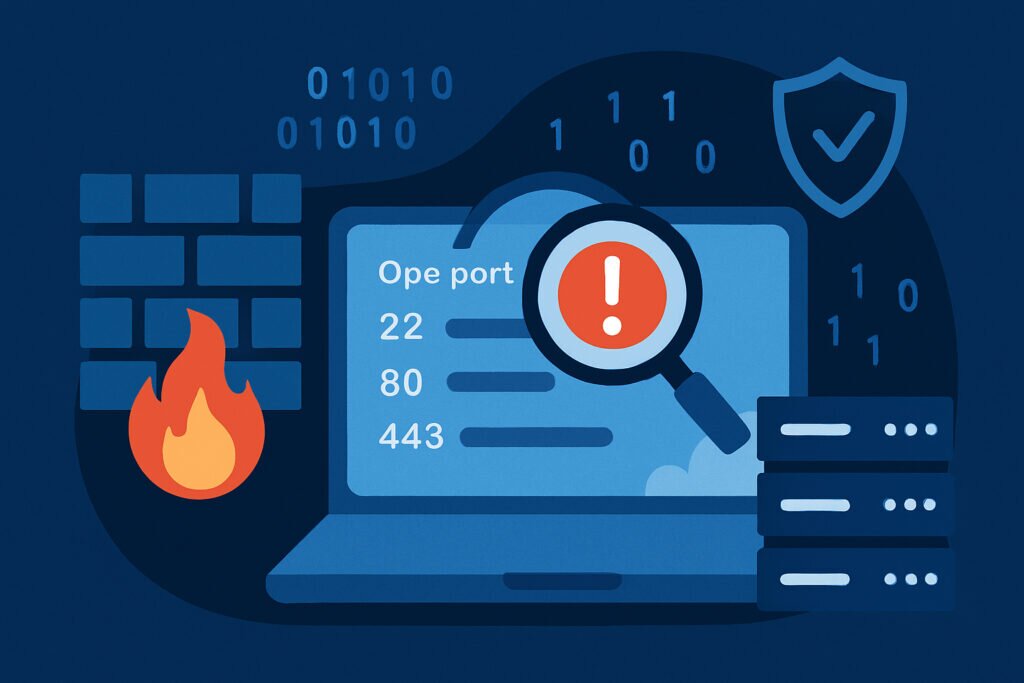
You’ve configured your firewall rules carefully. You’ve closed all unnecessary ports, set up strict access controls, and maybe even implemented intrusion detection. Yet here’s an uncomfortable truth: your firewall configuration is a snapshot in time, and the threat landscape changes every single day. What was secure yesterday might be vulnerable today, and you won’t know it until it’s too late.
The problem isn’t that firewalls don’t work – they absolutely do. The problem is assuming that setting them up once means you’re done. That’s where most security strategies fail, and it’s exactly the gap that attackers exploit.
The Static Security Illusion
Firewall rules are inherently static. You configure them, deploy them, and unless something obviously breaks, you probably don’t touch them again. This creates a dangerous assumption: that your security posture remains constant. In reality, your attack surface is constantly evolving.
I learned this the hard way a few years back when managing a client’s infrastructure. We had solid firewall rules in place, everything looked clean. Then during a routine audit, I discovered that port 8080 had been opened temporarily by a developer for testing six months earlier and never closed. Nobody noticed because nothing broke. But that open port was running an outdated version of a web service that had three known critical vulnerabilities.
That’s the gap. Firewall rules tell you what should be open or closed based on your configuration. They don’t tell you what’s actually exposed to the internet right now.
Configuration Drift: The Silent Killer
Configuration drift happens gradually and often invisibly. A developer opens a port for debugging. An automated deployment script modifies firewall rules. A service update changes default ports. An administrator makes a quick temporary change during an emergency and forgets to revert it.
Each of these changes might seem minor in isolation, but they accumulate. Over months or years, your actual network exposure can diverge significantly from your documented security policies. You think you have ports 80 and 443 open. In reality, you also have 3306, 5432, and 27017 exposed – your database ports, visible to anyone scanning the internet.
Firewall rules don’t audit themselves. They don’t send you alerts when they’ve been modified or when their implementation drifts from best practices. They simply execute whatever configuration they’re given, whether that configuration is current, outdated, or dangerously misconfigured.
The Version and Vulnerability Problem
Even when your firewall rules are perfectly configured, they can’t tell you what is running behind those open ports. Port 443 might be open because you need HTTPS, but firewall rules don’t tell you whether you’re running nginx 1.14 (which has known vulnerabilities) or nginx 1.24 (which is current and patched).
This distinction matters enormously. Attackers don’t just scan for open ports – they fingerprint the services running on those ports and check them against databases of known vulnerabilities. If you’re running outdated software on an open port, your perfectly configured firewall won’t protect you.
I’ve seen servers with textbook-perfect firewall configurations get compromised because the SSH service on port 22 was running an old version with a known authentication bypass. The firewall did exactly what it was supposed to do: allow SSH traffic. It just couldn’t know that the SSH service itself was vulnerable.
Multi-Cloud and Hybrid Complexity
The problem multiplies exponentially in multi-cloud or hybrid environments. You might have infrastructure across AWS, Azure, and your own data center. Each environment has its own firewall implementation – security groups, network ACLs, cloud firewalls, traditional hardware firewalls.
Maintaining consistency across these different systems is nearly impossible manually. What’s configured in AWS might not match what’s deployed in Azure. Your documented security policy might describe a setup that exists nowhere in reality.
Without continuous external monitoring, you have no unified view of what ports are actually exposed across your entire infrastructure. You’re managing security policies in isolation rather than monitoring your actual attack surface as attackers see it.
The External Perspective You’re Missing
Here’s the fundamental issue: firewalls give you an internal view of your security configuration. What you need is an external view of your actual exposure. These aren’t the same thing.
From inside your network, everything might look properly configured. From outside – from an attacker’s perspective – you might be broadcasting services you don’t even know are running. Maybe a forgotten test server is still responding on port 8000. Maybe a database accidentally bound to 0.0.0.0 instead of localhost. Maybe a Redis instance is exposed without authentication.
Firewall rules can’t tell you these things because they’re implementation details of the services themselves, not network-level configurations. You need active, external scanning to see what an attacker sees.
Compliance and Audit Requirements
From a compliance perspective, documenting your firewall rules isn’t enough anymore. Standards like PCI DSS, SOC 2, and ISO 27001 increasingly require evidence that your security controls are working as intended, not just configured correctly on paper.
Continuous external port monitoring provides that evidence. It shows auditors that you’re not just setting policies but actively verifying their implementation. It demonstrates due diligence in security management and provides audit trails of your actual security posture over time.
Bridging the Gap with Continuous Monitoring
The solution isn’t to abandon firewalls – they remain essential. The solution is to complement static firewall rules with continuous external monitoring that shows you what’s actually exposed.
External port scanning services work from outside your network, exactly like an attacker would. They discover all open ports, identify the services running on them, fingerprint software versions, and compare those versions against vulnerability databases. This gives you the external perspective your firewalls can’t provide.
The key is automation and continuity. A one-time port scan is better than nothing, but threats evolve constantly. You need continuous monitoring that alerts you the moment something changes – when a new port opens, when a service version becomes vulnerable, when your configuration drifts from your security policy.
What You Actually Need to Know
Effective security monitoring should answer these questions continuously:
What ports are actually open on my public IP addresses right now? What services are running on those ports and what versions? Do any of those services have known vulnerabilities? Has anything changed since the last scan? Does my actual exposure match my documented security policy?
Firewall rules can’t answer most of these questions. They execute policy, they don’t audit reality. That’s not a failure of firewalls – it’s simply not what they’re designed to do.
Frequently Asked Questions
Can’t I just run nmap occasionally to check? You can, but manual scanning is inconsistent and easy to forget. Automated continuous monitoring catches changes immediately rather than during your quarterly security review.
Don’t cloud providers handle this? Cloud security groups are just network-level firewalls. They have the same limitations – they enforce configuration but don’t audit actual exposure or service vulnerabilities.
Is this just for large enterprises? No. Small infrastructure is actually more vulnerable because it typically has less dedicated security oversight. A single exposed database port can be catastrophic regardless of company size.
How often should ports be scanned? Continuously or at minimum daily. Attackers scan the entire internet constantly. Your defensive monitoring should match that reality.
The gap between firewall configuration and actual security exposure is real, measurable, and actively exploited. Closing that gap requires seeing your infrastructure the way attackers see it – from the outside, continuously, with full awareness of not just what ports are open but what’s running behind them and whether those services are vulnerable. Firewall rules are essential, but they’re only half the picture.