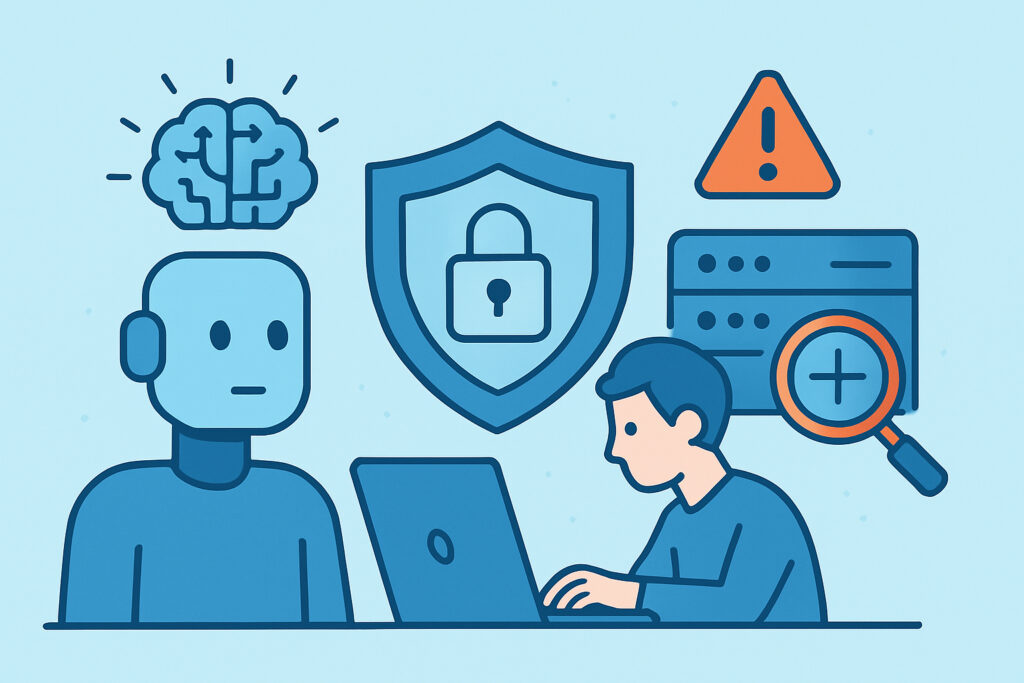
AI-driven tools now scan, fingerprint, and exploit exposed services faster than any human red team could a few years ago, and that shift is quietly rewriting the port scanning threat landscape for anyone running a public-facing server. Understanding what actually changed – and what hasn’t – matters more than chasing headlines about “AI hackers.”
What Machine Learning Actually Added to Reconnaissance
Traditional port scanning has always been mechanical: send packets, read responses, log open ports. That part hasn’t changed. What has changed is the layer sitting on top of the scan data. Attackers now feed raw scan output – banners, response headers, TLS certificate details – into models trained to classify service type, guess software version, and rank exploitability almost instantly, instead of a human manually cross-referencing a CVE database entry by entry.
A scan that used to take an analyst thirty minutes to interpret can now be triaged in seconds. That compresses the window defenders have between “port becomes exposed” and “port gets targeted” from days down to hours in some documented incident writeups.
Faster Correlation Between Open Ports and Known Exploits
The biggest practical shift is in exploit matching. Attackers used to run tools like Shodan or Censys, then separately check CVE databases for matches. AI models compress that workflow – they ingest a fingerprint (service name, version string, even subtle timing behavior) and output a ranked list of likely vulnerabilities with working exploit code references, often before a human analyst would have finished the first lookup.
This is the part that changes risk calculus for defenders. A misconfigured Redis instance, an outdated Jenkins panel, or an RDP endpoint left open after a migration used to have a grace period before it got noticed. That grace period is shrinking. Automated crawlers running AI-assisted triage now sweep entire IP ranges continuously, and a newly opened port on a known-vulnerable service can attract targeted traffic within hours instead of weeks.
Where the Myth Falls Apart
There’s a persistent misconception worth addressing directly: the idea that AI has made port scanning fundamentally undetectable or unstoppable, so traditional hardening no longer matters. That’s not accurate. AI speeds up the analysis and triage steps of an attack chain, but it doesn’t change the underlying physics of network scanning – a SYN scan still looks like a SYN scan, and an unnecessary open port is still an unnecessary open port regardless of how fast someone can weaponize it.
The mistake teams make is treating “AI-powered attacks” as a reason to feel resigned rather than a reason to close the gap faster. If anything, the response should mirror the offense: automate detection and response on the defensive side just as aggressively as attackers have automated reconnaissance.
A Realistic Scenario
Picture a small e-commerce operation that spins up a temporary staging server for a new payment integration, exposing a database port for convenience during testing. In the past, that kind of oversight might sit unnoticed for a week or two before anyone stumbled onto it. Now, an AI-assisted scanning bot picks it up in a routine sweep, fingerprints the database version, matches it against a known unauthenticated-access misconfiguration, and either exfiltrates data or drops a ransom note within a matter of hours. The team never touched the staging box again after the initial test – but the internet noticed it immediately. This is a common pattern behind headlines about exposed databases getting wiped or ransomed within days of going live.
How Defenders Are Using the Same Technology
The encouraging side of this shift is that AI-assisted analysis works just as well for defense. Instead of a human manually reviewing scan diffs across dozens of servers, pattern-recognition models can flag anomalous new ports, unusual service banners, or version drift automatically – catching in minutes what used to take a scheduled weekly review. This is the same underlying capability attackers use, just pointed at protecting infrastructure instead of probing it.
Continuous external scanning combined with automated version detection also closes the gap on zero-day exposure windows, since the moment a vulnerable version is flagged publicly, defenders need to know within hours – not at the next quarterly audit – whether their own servers are running it.
Practical Steps to Adapt Your Defense Posture
A few adjustments matter more now than they did five years ago:
Shorten the interval between external scans. Weekly or monthly scanning cycles leave too much room for an AI-accelerated attacker to find and exploit a new opening before you do. Reducing the interval matches your exposure to how reconnaissance actually happens today.
Treat every temporary or staging environment as production-grade from a network exposure standpoint. Attackers’ automated tools don’t distinguish between “real” and “test” servers – if it’s reachable, it gets scanned.
Prioritize alerting over reporting. A monthly PDF report has limited value against a threat that can go from discovery to exploitation in under a day. Real-time or near-real-time alerting on newly opened or changed ports closes that gap.
Keep service banners and version strings as unrevealing as reasonably possible, since AI-assisted fingerprinting relies heavily on that metadata to rank targets quickly.
FAQ
Does AI make port scanning itself faster, or just the analysis afterward?
Mostly the analysis. The scanning packets themselves still travel at network speed, which hasn’t changed. What’s faster is the interpretation – matching a fingerprinted service to known vulnerabilities, which used to require manual research and now happens almost instantly through automated correlation.
Can small businesses actually be targeted by AI-driven scanning, or is this only an enterprise problem?
Automated scanning tools sweep entire IP ranges indiscriminately, so company size is irrelevant to whether you get scanned. It only affects whether you’re interesting enough for a human to follow up manually once something exploitable is flagged.
Is there any defensive value left in traditional manual port audits?
Yes, particularly for context that automation misses – understanding why a port is open, whether it’s genuinely needed, and whether a compensating control exists. Automated and manual review work best combined rather than as substitutes for one another.
The underlying lesson hasn’t really changed: an open port that doesn’t need to be open is a liability regardless of how it gets discovered. What’s different is the timeline. Treating port exposure as a slow-moving risk is no longer realistic, and closing that gap starts with knowing what’s open before an automated scanner – human-directed or otherwise – finds it first.